In 2026, social media is not peripheral to teenage life. It is one of the environments in which adolescents communicate, maintain friendships, consume entertainment, encounter news and participate in social life.
In the United States, up to 95% of young people aged 13 to 17 report using a social-media platform, while approximately one-third say they use social media “almost constantly.”
Teenagers spend an estimated 3.5 hours per day on social media on average. Removing young people from these platforms is therefore not comparable to restricting access to a product they encounter occasionally.
Governments are attempting to regulate an environment in which a substantial part of adolescent social life now takes place. Yet ubiquity does not mean safety. The same digital infrastructure that allows young people to communicate and build communities also exposes them to harmful content, compulsive platform design, harassment and sexual exploitation.
The U.S. Surgeon General has warned that the available evidence is insufficient to conclude that social media is sufficiently safe for children and adolescents. Young people spending more than three hours per day on social media face approximately twice the risk of experiencing poor mental-health outcomes, including symptoms of anxiety and depression.
Among adolescents aged 13 to 17, 46% have also reported that social media makes them feel worse about their body image. The risks are not confined to mental health. Social-media platforms, messaging applications and online gaming environments also provide channels through which adults can identify, contact and groom children.
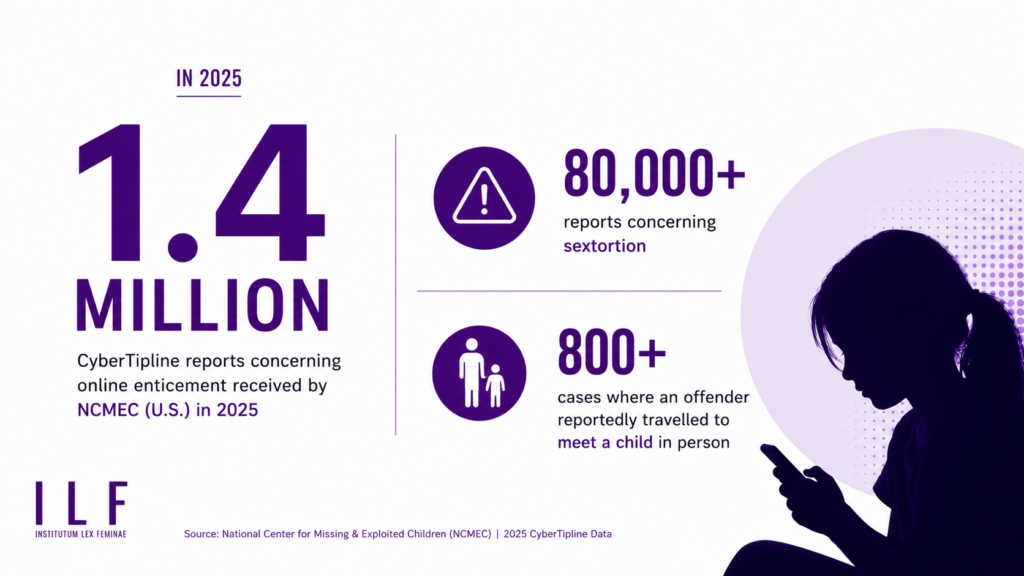
The U.S. National Center for Missing & Exploited Children received approximately 1.4 million CyberTipline reports concerning online enticement in 2025.
Those reports included more than 80,000 concerning sextortion and more than 800 cases in which an offender reportedly travelled to meet a child in person.
NCMEC emphasizes that this form of exploitation occurs across social media, messaging services and gaming platforms.
Against that background, the political attraction of minimum-age legislation is understandable. If children face risks because they are present on social platforms, preventing or delaying that presence appears to offer a direct regulatory solution.
With the Online Safety Amendment (Social Media Minimum Age) Act 2024, Australia has gone further than most jurisdictions. Since 10 December 2025, designated platforms including Facebook, Instagram, Snapchat, TikTok, X, YouTube, Reddit and Threads have been required to take reasonable steps to prevent Australians under 16 from creating or maintaining accounts.
The obligation falls on platforms rather than children or their parents. Implementation, however, is exposing the difference between legislating an age threshold and actually enforcing one.
Meta reported removing approximately 756,000 suspected under-16 Australian accounts from Facebook and Instagram between December 2025 and June 2026.
YouTube reported roughly 740,000 account blocks, while TikTok said it initially removed approximately 550,000 accounts. Nevertheless, evidence presented during an Australian Senate inquiry indicated that more than 80% of minors were still using social-media platforms during the early months of the regime.
Platforms have cautioned that the data remain preliminary and that age-assurance systems are still developing, while lawmakers are considering stronger investigative powers and substantially higher penalties.
France has encountered a different problem before reaching that stage. Parliament approved legislation intended to prevent children under 15 from maintaining social-media accounts, but on 14 August the Constitutional Council struck down the measure.
The court concluded that the framework interfered with constitutional freedoms and raised significant problems surrounding age verification, including the fact that enforcing a prohibition on minors could effectively require adults to prove their age as well.
President Emmanuel Macron has asked the government to rewrite the legislation rather than abandon the policy objective. France and Australia therefore illustrate two distinct regulatory barriers. France demonstrates the first: governments must design age restrictions that are compatible with freedom of expression, privacy and other fundamental rights.
Australia demonstrates the second: even where legislation survives and enters into force, governments must establish that platforms can reliably determine age, prevent circumvention and produce the behavioural outcome the law was designed to achieve.
This distinction matters because the number of accounts removed is not necessarily the same thing as the number of children protected. A platform may delete hundreds of thousands of accounts while young users migrate to new accounts, different services or less regulated digital environments. Conversely, the continued presence of minors online does not by itself establish that the Australian experiment has failed; the regime remains relatively new and its enforcement mechanisms are still developing.
There is also a deeper policy question. Social media produces genuine risks for children, including risks of exploitation, but it also performs genuine social functions for them. Effective regulation therefore cannot be measured simply by asking whether governments are “tough” on social media.
The relevant questions are whether a restriction reduces exposure to identifiable harms, whether age verification can operate without disproportionate intrusion into privacy, whether children simply circumvent the restriction, whether harmful activity migrates elsewhere and whether the regulatory burden imposed on platforms produces measurable improvements in child safety.
France and Australia have reached different points in the same policy experiment. France is confronting the legality of the regulatory architecture. Australia is confronting its enforceability. Both demonstrate why passing a law is only the beginning.
The real measure of child-safety policy is not the restriction written into legislation, but whether that restriction can protect children in practice without creating harms of its own.